
When it comes to mid-range housing societies near Islamabad, University Town Islamabad continues to attract both genuine buyers and long-term investors. But instead of relying on brochures and marketing promises, what truly matters is the real on-ground situation.
In this detailed walkthrough, we explore Sector D, Sector F, and the Commercial Area of University Town Islamabad, focusing on street conditions, construction pace, business activity, road network, and most importantly — the actual investment strength of these areas.
If you’re considering a 5 Marla, 10 Marla, or 1 Kanal plot, or even exploring commercial options, this guide will help you understand where things truly stand today.
University Town Islamabad – Why Location Still Matters
Before diving into sectors, let’s talk about positioning.
University Town sits within the expanding Islamabad–Wah–Rawalpindi corridor, benefiting from:
- Motorway connectivity
- GT Road access
- Close proximity to developed urban zones
- Growing residential demand
This positioning gives it steady long-term relevance rather than speculative hype.
Unlike newly launched projects, University Town has matured over time — and maturity in real estate often translates into stability.
Sector D – Where Activity Is Clearly Visible
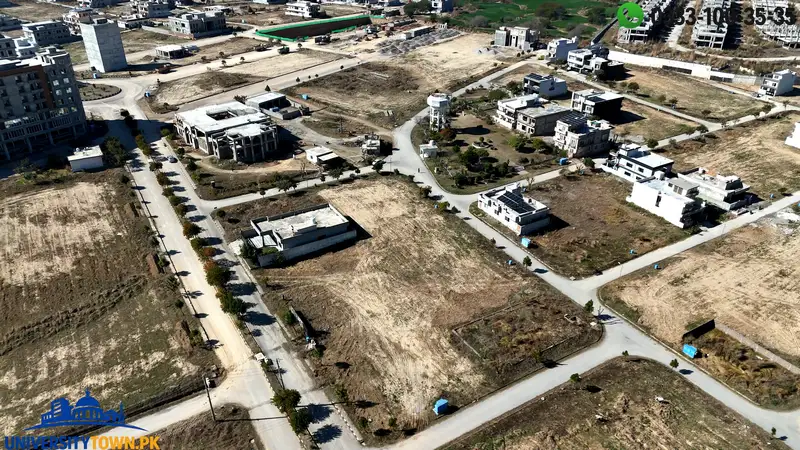
If you walk through Sector D today, you immediately notice something important:
It feels lived-in.
This is not just plotted land — it’s an active neighborhood.
What You’ll Notice On-Ground
- Properly paved internal roads
- Houses under construction
- Occupied homes
- Movement of residents
- Utility infrastructure in place
Sector D is no longer in a raw development stage. It has transitioned into a semi-established residential environment.
Why Sector D Appeals to End-Users
For buyers planning immediate construction, Sector D offers:
- Lower uncertainty
- Developed streets
- Nearby commercial access
- Better resale liquidity
In real estate, populated sectors create confidence. Confidence drives value.
Sector F – The Growth-Oriented Option
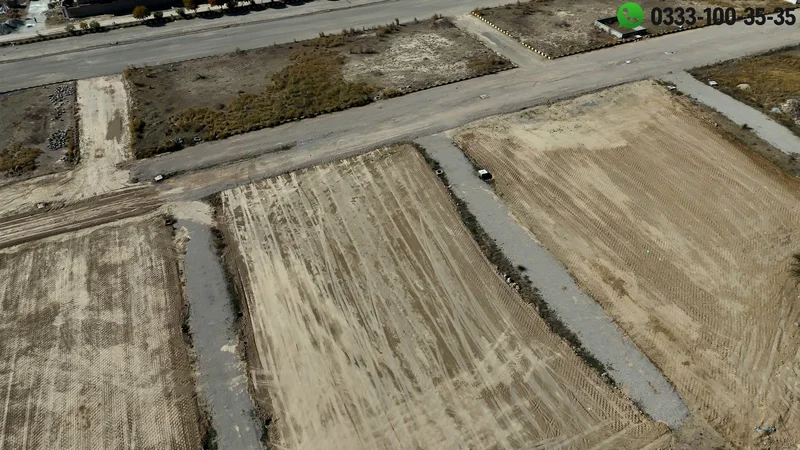
Now shift your attention to Sector F.
Unlike Sector D, Sector F feels more transitional — and that’s not a weakness.
It’s an opportunity.
Current Development Signs
- Road formation progressing
- Plot demarcations visible
- Construction gradually increasing
- Infrastructure expanding outward
Sector F represents the typical “next wave” sector — where prices often reflect growth potential rather than maturity.
Why Investors Watch Sector F Closely
Emerging sectors typically offer:
- Better entry price
- Higher appreciation margin
- Future construction surge potential
As Sector D becomes more saturated, demand often moves toward adjacent sectors — and Sector F is positioned to benefit from that spillover.
Commercial Area – The Engine of Property Value
Residential growth without commercial support rarely sustains long-term value.
The University Town Commercial Area plays a critical role in supporting the surrounding sectors.
During the walkthrough, several important factors become clear:
- Active retail shops
- Service businesses operating
- Visible footfall
- Ongoing business expansion
This commercial activity strengthens nearby residential demand.
How Commercial Presence Impacts Plot Prices
Residential plots near functional commercial areas typically:
- Hold value better
- Resell faster
- Attract rental demand
- Appeal more to families
However, strategic distance matters. Slightly offset from the main commercial strip often provides the best balance between convenience and quiet living.
Street Conditions & Road Network – A Practical View
One of the strongest indicators of development maturity is road infrastructure.
Across Sector D and parts of Sector F:
- Roads are accessible
- Internal street grids are organized
- Access routes are clear
Good road planning increases:
- Daily convenience
- Emergency access
- Construction feasibility
- Market demand
In real estate, accessibility directly influences pricing.
Construction Activity – A Strong Market Signal
Construction is more than brick and cement. It’s a confidence indicator.
Sector D shows:
- Consistent construction activity
- Occupied homes
- Functional neighborhood growth
Sector F shows:
- Emerging construction
- Early-stage investment movement
Active construction usually means investors are not just speculating — they’re building.
Comparing Sector D & Sector F – Which Is Better?
There is no universal answer. It depends on your goal.
If You Want Immediate Construction
Sector D is more suitable.
- Developed streets
- Utility readiness
- Established environment
If You Want Appreciation Potential
Sector F may offer better upside.
- Lower entry positioning
- Growth trajectory
- Future population expansion
Both sectors serve different investment strategies.
Plot Size Analysis – What Works Best?
University Town offers a range of plot categories that suit different buyers.
5 Marla Plots
- Affordable investment
- Good rental opportunity
- Strong first-time buyer demand
10 Marla Plots
- Balanced pricing
- Popular among families
- Strong resale potential
1 Kanal Plots
- Premium category
- Long-term capital growth
- Attractive for larger home construction
Your choice should align with financial planning and holding capacity.
Commercial Investment – Worth Considering?
Commercial property in University Town can provide:
- Rental income stream
- Retail business viability
- Long-term capital gain
However, commercial investment requires deeper analysis of:
- Foot traffic
- Parking availability
- Road exposure
- Surrounding population density
Commercial property carries higher return potential — and slightly higher risk.
What Makes University Town Different from New Projects?
Unlike recently launched societies that rely heavily on marketing, University Town has:
- Physical development history
- Active residential presence
- Real commercial activity
- Road infrastructure visible on ground
Mature societies may not promise overnight returns — but they often deliver steadier growth.
Investment Outlook – Short Term vs Long Term
Short-Term Perspective
Sector D may offer more stable resale activity.
Medium-Term Perspective
Sector F may show better appreciation once development accelerates.
Long-Term Perspective
Both sectors benefit from Islamabad’s outward expansion and population growth.
Real estate growth rarely happens overnight — but consistent infrastructure and occupancy build real value over time.
Who Should Consider Buying Here?
✔ Families planning construction
✔ Mid-range budget investors
✔ Long-term holders
✔ Buyers seeking developed surroundings
✔ Investors preferring gradual appreciation over speculation
University Town appeals to practical buyers rather than aggressive speculators.
Important Buyer Checklist
Before finalizing any deal:
- Verify documentation
- Confirm development status
- Visit plot physically
- Check road access
- Confirm transfer procedure
- Compare recent market transactions
On-ground verification is always stronger than verbal claims.
Final Thoughts
University Town Islamabad Sector D and Sector F offer two different but complementary investment angles.
Sector D reflects development maturity and immediate usability.
Sector F reflects forward-looking growth potential.
The commercial area strengthens both sectors by adding livability and economic value.
Whether you’re investing in a 5 Marla residential plot or a commercial unit, your decision should match your timeline, risk comfort, and long-term vision.
Smart property investment is not about hype — it’s about understanding ground reality.
For Site Visits & Updated Inventory
Gains Real Estate and Marketing Pvt Ltd
📞 03355592930
💬 WhatsApp: 03355592930
Stay updated for more University Town development reviews and smart investment guidance.